

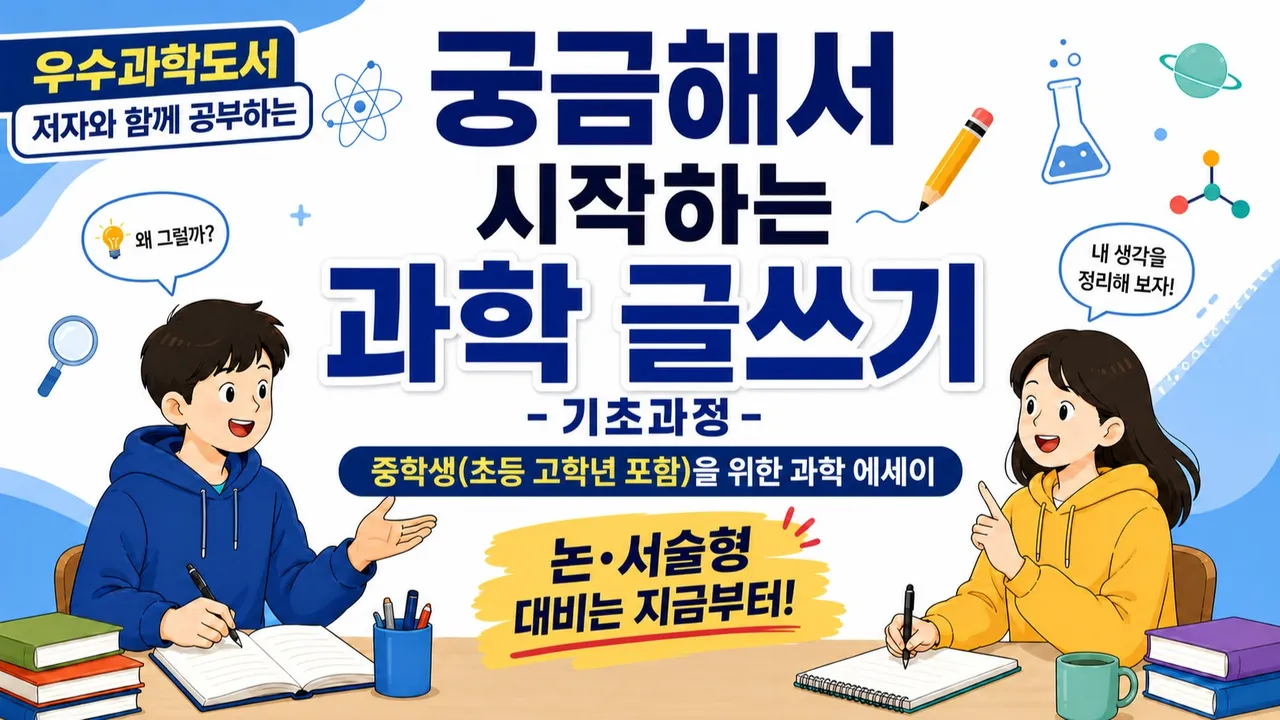
궁금해서 시작하는 과학 글쓰기
0
(0)
과학을 대상으로 글쓰기를 해볼거에요. 아이들의 논리적 사고력과 창의력 키우기에 중요한 수업이 됩니다. 그리고 논서술형 시험을 준비하는데 필수이고, AI 프롬프트 작성에 큰 도움이 됩니다.
180,000G
(US$124.20)
Class Type
Multi-Session
Ages
11-13
Class Size
Max 10people
Duration
50min
Replay
가이아
Reviews
3
앞으로 논서술형 평가로 전환될 것이 분명하다고 합니다. 우리 아이들이 지금까지 공부해 온 방식을 바꾸어야 할지도 모릅니다. 어쩌면 좋을 지 막막하기도 합니다. 물론 틈틈이 논술 공부를 한 학생도 있을 겁니다. 그런데 인문 독서 논술과 글쓰기가 모든 것을 채워주지는 못합니다. 왜냐하면 글쓰기도 분야에 따라 다르거든요. 특히 과학 글쓰기는 상당히 다릅니다. 관심있는 학부모들께서는 수능의 국어문제에 지문으로 등장하는 과학분야 내용을 보신 적이 있으실테죠. 과학적 논리로 쓰여진 글을 읽고 빠른 시간에 답하기는 쉽지 않습니다. 인문과 과학의 영역은 우리 아이들이 사용하는 뇌의 부분이 다르기 때문입니다. 언어처리 영역의 경우 공통이지만, 정보처리 분석과 추가 활성화되는 부분은 전혀 다릅니다. 그럼 과학 논술과 글쓰기는 언제부터 어떻게 준비해야 할까요? 이 수업은 그 질문을 위해 마련되었습니다.
아이들은 하루에도 몇 번씩 "왜?"라고 묻습니다. 그런데 그 "왜?"를 글로 옮기는 방법은 아무도 가르쳐 주지 않습니다. 그래서 이 초등 고학년에서 중학교 학생이 쓰는 과학 글은 대개 둘 중 하나가 됩니다. "정말 신기했다"로 끝나는 감상문이거나, 인터넷에서 찾은 설명을 그대로 옮긴 베껴 쓰기입니다.
과학 에세이는 그 사이에 있습니다. 내 궁금증에서 출발하지만, 느낌이 아니라 증거로 답하는 글입니다.
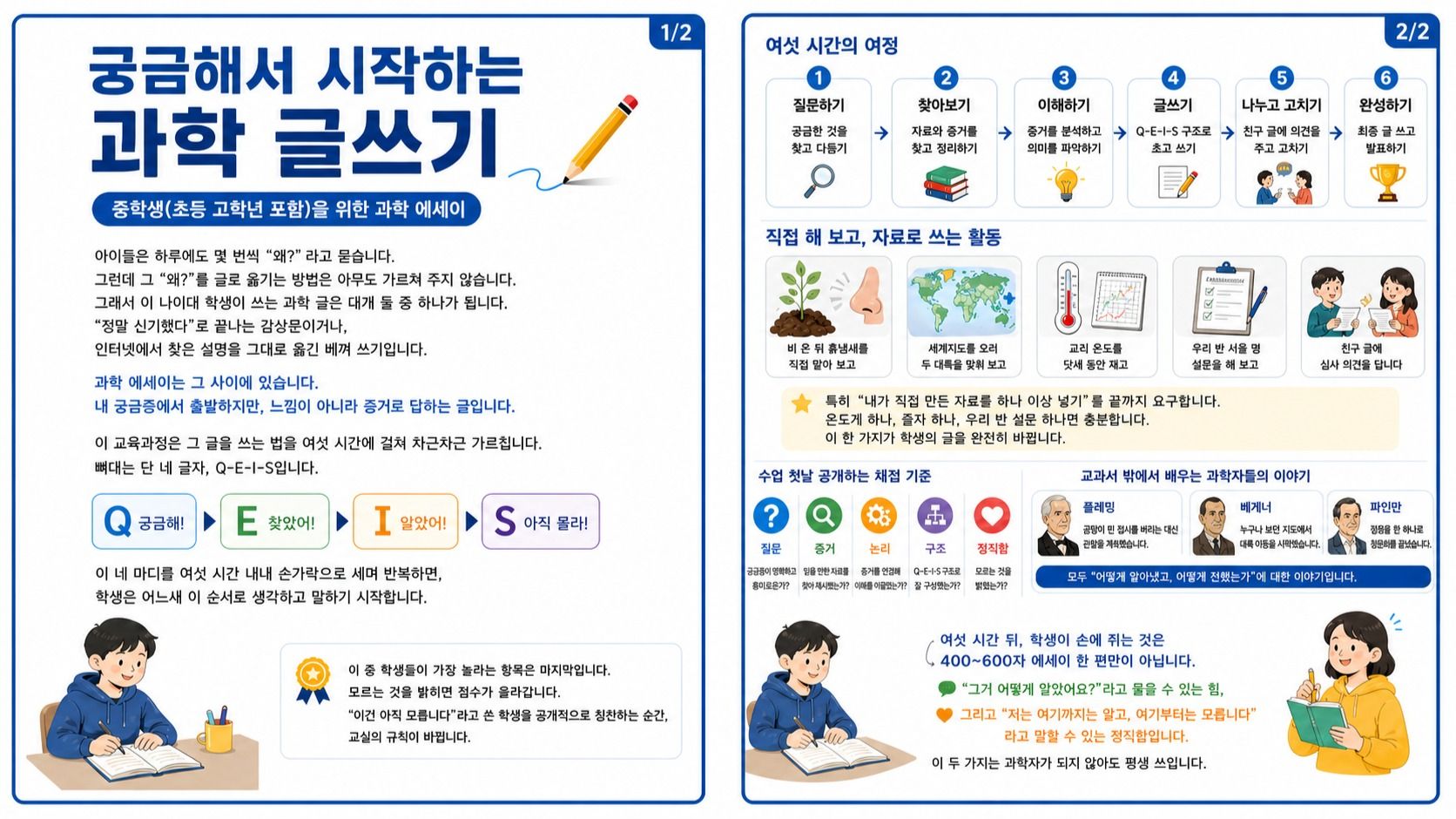
이 교육과정은 그 글을 쓰는 법을 여섯 시간에 걸쳐 차근차근 가르칩니다. 뼈대는 단 네 글자, Q-E-I-S입니다.
궁금해! → 찾았어! → 알았어! → 아직 몰라!
이 네 마디를 여섯 시간 내내 손가락으로 세며 반복하면, 학생은 어느새 이 순서로 생각하고 말하기 시작합니다.
수업의 절반 이상이 활동과 연관됩니다. 비 온 뒤 흙냄새를 직접 맡아 보고, 세계지도를 오려 두 대륙을 맞춰 보고, 교실 온도를 닷새 동안 재고, 친구 글에 심사 의견을 답니다. 특히 "내가 직접 만든 자료를 하나 이상 넣기" 를 끝까지 요구합니다. 온도계 하나, 줄자 하나, 우리 반 서른 명 설문 하나면 충분합니다. 이 한 가지가 학생의 글을 완전히 바꿉니다.
채점 기준도 수업 첫날 공개합니다. 질문·증거·논리·구조·정직함 다섯 영역인데, 이 중 학생들이 가장 놀라는 항목은 마지막입니다. 모르는 것을 밝히면 점수가 올라갑니다. "이건 아직 모릅니다"라고 쓴 학생을 공개적으로 칭찬하는 순간, 교실의 규칙이 바뀝니다.
다루는 이야기는 교과서 밖에서도 가져옵니다. 곰팡이 핀 접시를 버리는 대신 질문을 적은 플레밍, 누구나 보던 지도에서 시작한 베게너, 지도 위에 막대를 그려 사람을 살린 존 스노우, 얼음물 컵 하나로 청문회를 끝낸 파인만. 모두 "어떻게 알아냈고, 어떻게 전했는가" 에 대한 이야기입니다.
여섯 시간 뒤 학생이 손에 쥐는 것은 400~600자 에세이 한 편만이 아닙니다. "그거 어떻게 알았어요?" 라고 물을 수 있는 힘, 그리고 "저는 여기까지는 알고, 여기부터는 모릅니다" 라고 말할 수 있는 정직함입니다. 이 두 가지는 과학자가 되지 않아도 평생 쓰입니다.
지금부터라도 차근차근 과학 글쓰기를 익혀간다면 논서술형 문제뿐만 아니라 우리 아이들의 논리적 사고력과 창의력 향상에도 분명 좋은 결과를 가져올 것입니다.
Total 6 sessions
Session 1
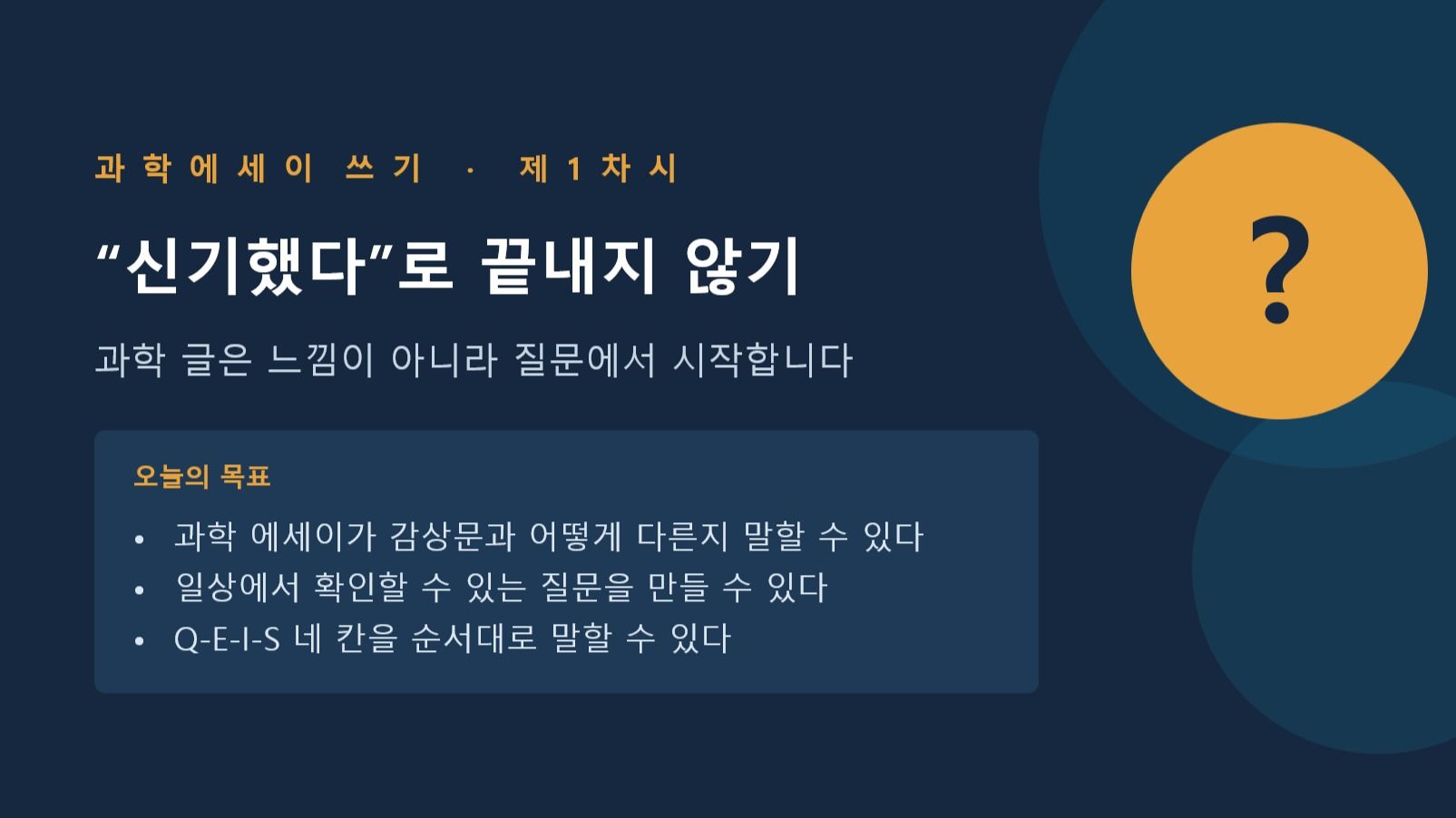
"신기했다"로 끝내지 않기
비가 그친 뒤 나는 그 냄새, 왜 날까요? 같은 질문에 세 친구가 전혀 다르게 답합니다. "기분이 좋아진다"(감상문), "흙냄새다"(말 돌려막기), 그리고 "흙 속 작은 생물이 만든 물질이 빗방울을 타고 날아온 것이다"(과학 에세이의 씨앗). 학생들은 이 셋을 비교하며 과학 글이 무엇인지 스스로 찾아냅니다.
Session 2
증거를 모아라
"A형은 소심하다"에 손을 드는 학생들에게 묻습니다. "왜 그렇게 생각했어요?" 답은 대부분 "내 친구가 그래서"입니다. 이 자리에서 배웁니다. 내 경험은 증거 중에서 가장 약한 종류라는 것을. 증거에도 등급이 있습니다. 소문이 별 하나라면, 학술 논문과 내가 직접 잰 값이 별 다섯입니다. 학생 자신이 최고 등급 자료의 생산자가 될 수 있다는 사실이 이 시간의 전환점입니다. 자료를 검사하는 다섯 질문도 배웁니다 — 누가? 언제? 어디에? 몇 명? 누가 이득?
Session 3
설계도를 그려라
봉투 안에 든 짧은 과학 글이 문단별로 잘려 있습니다. "4분 안에 순서대로 놓으세요." 모둠 게임이 끝나면 묻습니다. "무엇을 보고 순서를 맞췄나요?" 학생들의 답이 그대로 오늘 배울 내용이 됩니다. 이미 알고 있던 것에 이름만 붙이는 시간입니다. 핵심 규칙은 하나입니다. 한 문단에는 한 가지 생각만. 주장-증거-설명-연결 네 칸을 채우면 문단 하나가 완성됩니다. 오늘 학생은 글을 한 줄도 쓰지 않습니다. 설계도만 그립니다.
Session 4
과학의 문장
네 가지 원칙을 배웁니다. 흐릿한 말을 숫자와 이름으로 바꾸기, 숫자에 단위와 조건 붙이기, 확실한 만큼만 말하기, 그리고 비유를 쓴 뒤 그 비유의 한계를 한 문장으로 밝히기. 세계 최고의 과학자들도 우연일 가능성이 거의 사라질 때까지 "발견했다"라고 말하지 않았다는 사실을 알게 되면, 닷새 잰 자료로 "밝혀냈다"라고 쓰지 않게 됩니다.
Session 5
고쳐 쓰기
학생들은 서로의 심사자가 되어 짝의 글을 읽고 칭찬 하나, 질문 하나, 제안 하나를 적습니다. 규칙은 셋 — 글을 평가하되 사람을 평가하지 않기, 모든 의견에 위치를 말하기, 대신 고쳐 주지 말고 방향만 알려주기. 받은 의견을 안 고칠 자유는 언제나 글쓴이에게 있습니다. 인용과 베끼기의 경계, 그리고 AI를 쓸 때의 세 원칙도 함께 배웁니다. AI는 증거가 아니고, 생각은 내가 하며, 썼으면 밝힌다. 고치는 순서는 구조 → 증거 → 문단 → 문장 → 맞춤법입니다.
Great for These Kids
과학 글쓰기를 처음 배우려는 학생
글쓰기를 통해 논리적인 사고력을 키우려는 학생
논서술형 답변을 체계적으로 익히려는 학생
Check Before Class
- 1
사전 배포하는 수업자료
- 2
노트, 필기구 등
When a cancellation request is submitted for a multi-session class, all sessions starting from the time the cancellation request is received onward will be canceled together.
For multi-session class cancellations, a penalty fee is charged separately from the cancellation fee.
To reschedule, please cancel and rebook.
Canceling individual sessions within a bundle is not available.
If a session cannot be held due to the teacher, you will be notified by email.
If a separate refund policy applies, you can view the detailed policy on the payment or event page.
Teacher Info
Auto-translated to English.
가이아
Reviews
3
Hello. I am Teacher Gaia, and I would like to play with you, making nature my companion. Science is not about studying; it is about feeling nature, being curious about it, and thinking about those questions for yourself. The more experiences you have like this, the easier and more approachable science becomes. For example, how about these questions? "How much higher can mountains get?" "How much deeper can the ocean get?" Have you ever visited mountains or the sea and asked yourself these questions? The foundation of science is observation, not theory. If you start with observation and solve questions one by one, the foundation of your scientific knowledge becomes solid, allowing you to solve anything. We often hear stories about many great scientists doing odd things in nature during their childhood. Since play and thoughts during childhood have a significant impact on intellectual growth, why not try playing with nature? I would like to study the Earth and its surrounding environment with you. From water and air to rocks and life, I want to observe, be curious about, and solve those questions together. It is said that to truly play with the Earth, you need a solid foundation in physics, chemistry, biology, and earth science, but there is no need to worry. You will naturally learn as you simply play. Let’s play together. I hope you develop the ability to solve nature’s problems on your own through diverse experiences, but I am concerned that students these days lack the time for that. Instead, I would like you to explore various environments and situations, even if indirectly, together with me. I have traveled quite a bit. I have been to the South Pole, the North Pole, and Africa. I hope we can have fun playing with the Earth while sharing those experiences with you. I studied science education at Seoul National University and geology at the University of Tokyo in Japan. I taught students at the university level for a long time. In my spare time, I mentored students at science high schools; I won top prizes at the National R&E Competition multiple times and even participated in the ISEF competition held in the United States. Having served as a revision committee member for the science sector when Korea’s education curriculum was reformed, I understand the connections and flow of the curriculum from elementary to middle and high school better than anyone. I also served as a review committee member for elementary and middle school science textbooks (including digital textbooks). Furthermore, I served as a question setter for the College Scholastic Ability Test (CSAT). Meanwhile, I have authored several science books for elementary and middle school students, some of which were selected as Outstanding Science Books and others as Sejong Books. Additionally, having served for a long time as an editorial board member and editor-in-chief of a science magazine within a scientific academic society, I believe I possess more professional knowledge and experience in scientific writing than anyone else. If the opportunity arises, I would like to study scientific writing together with you. Scientific writing is an excellent method for developing logical thinking skills and creativity. I would love to study science with you in any form, while enjoying the process together.
Experience & Activities
·
Awarded Excellent Science Book and Sejong Book
·
Chairman of the Korean Earth Science Olympiad
·
Chairman of the Organizing Committee for the International Earth Science Olympiad
See Full Teacher Profile
Class Reviews
Growth Reviews for This Class


