


Auto-translated to English.
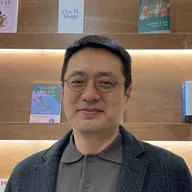
서지훈
Reviews
1
"Korean language proficiency begins with concepts, not problem-solving." Hello. I am Seo Ji-hoon, an instructor of reading and essay writing for upper elementary grades (5th and 6th). I believe that true Korean language proficiency is not built simply by reading many books and passages and solving many problems. The power to understand text begins with grasping the concepts contained within it. For instance, if you accurately know concepts such as "fairness," "opportunity cost," "causation," "perspective," "evidence," and "correlation," you can identify important content and connect them even in social studies, science, or philosophy passages you encounter for the first time. Conversely, if you lack a solid understanding of concepts, you will struggle when encountering new texts, even if you read passages multiple times and solve many problems. Therefore, starting from the 5th and 6th grades, I design classes where students systematically learn core concepts from various fields—including humanities, social sciences, science, and technology—and apply those concepts to actual passages to read, think, and express themselves. 📌 Features of My Class ① Students learn core concepts from diverse fields. We go beyond simply understanding the content of the text and first examine the core concepts necessary for comprehending it. ② We study in the order of Background Knowledge → Concept Understanding → Reading the Passage → Thinking → Essay Writing. During the 50-minute class, students apply the concepts learned to actual passages, answer questions, and organize their thoughts along with supporting evidence. ③ We place great importance on "why you thought that way." What is important in essay writing is not using many difficult words. One must clearly articulate their argument, identify and connect evidence within the passage, and be able to compare their ideas with others. ④ We manage the concepts learned in class cumulatively. We record cumulatively which concepts the student has newly learned and which concepts they understand well. This allows us to verify "how their thinking skills are growing," rather than simply "how many points they received on this exam." ⑤ After class, the writing is refined through essay corrections. Students complete the content they thought about in class into writing and check their answers using our in-house developed essay evaluation system. We developed this system by reverse-engineering the Korea Institute of Curriculum and Evaluation's (KICE) intentions for the CSAT. Rather than simply providing a score, we revise the writing by checking what evidence was used in the passage, whether the argument connects well with the evidence, and what could be improved. --- 📚 Why Start with 5th and 6th Grades? Upper elementary grades are the time to move beyond simple reading comprehension and transition to a learning process of 'reading → thinking → finding evidence → expressing one's own thoughts.' In particular, as students advance to middle and high school, the ability to read long passages, analyze data, and explain one's own judgments with supporting evidence becomes increasingly important across various subjects such as social studies, science, and Korean language. Rather than engaging in advanced learning methods that force elementary students to solve difficult CSAT problems, it is more important to learn in advance the concepts and reading methods that form the foundation of the thinking required for the CSAT. Even elementary students can learn concepts such as 'correlation and causation,' 'equality and equity,' 'argument and evidence,' and 'perspective and prejudice' at their own level. By repeatedly applying these concepts to various passages, you will develop a habit of thinking, "What is this about?" when encountering a new text, rather than simply stopping at "What is this about?" --- 🎯 The Class I Want to Create I do not want to make this class a mere Korean language problem-solving session. Nor is it a class where students simply read a book and write a book report. It is a class that repeats the process of learning a new concept → discovering that concept in various texts → comparing different perspectives → finding evidence to think → and expressing it in one's own words. I will help students so that when they encounter unfamiliar passages in middle and high school, they do not panic, but can confidently think, "I know this concept." "I can find the argument and evidence in this text." "I can explain the difference between the two perspectives." "I can state my thoughts along with evidence." Skills for the CSAT begin with how accurately one holds concepts and thought structures in their mind. We will work together to build the power to read, think, and express, starting step-by-step from the 5th and 6th grades of elementary school and continuing through middle and high school.
Experience & Activities
·
2 years as the lead instructor for Reading and Essay Writing at Olgeum Korean Language Academy in Daechi-dong
·
5 years as the head essay instructor at Ganeung Segye Academy in Myeongil-dong
·
4 years of operating an elementary school reading and writing book club
·
Books: The Last Enter Key, The Architect of Reason
1 Parent Reviews

H**
13years old
2026. 10. 22 PM 11:51:51
[체험수업] 수능 국어의 첫걸음! 개념으로 쓰는 논리적 글쓰기
The class materials are good, and the content is substantial and informative. The teacher is calm and effectively guides the child to think and answer.
Auto-translated to English.